Bitcoin’s growth: risks, regulation, and institutional reality
About early insights on Bitcoin’s transformation from a libertarian experiment to a regulated, institutional asset.
This is a short-form post. I hope you will like it.
Eleven years ago, Martin Mignot, now Partner at Index Ventures, reflected on a defining moment for Bitcoin when Jeremy Allaire, CEO of Circle, emphasized the critical importance of focusing on the risks inherent to cryptocurrencies, volatility, fraud, criminal activity, and the inevitable need for government regulation to protect consumers.
At that time, this signaled Bitcoin’s transition from an obscure hobbyist phenomenon to a mainstream, institutional asset class.
Circle had just in October 2013 completed a $9M Series A from Accel and General Catalyst to make “Bitcoin mainstream” (TechCrunch article). Circle is now an $18B public company.
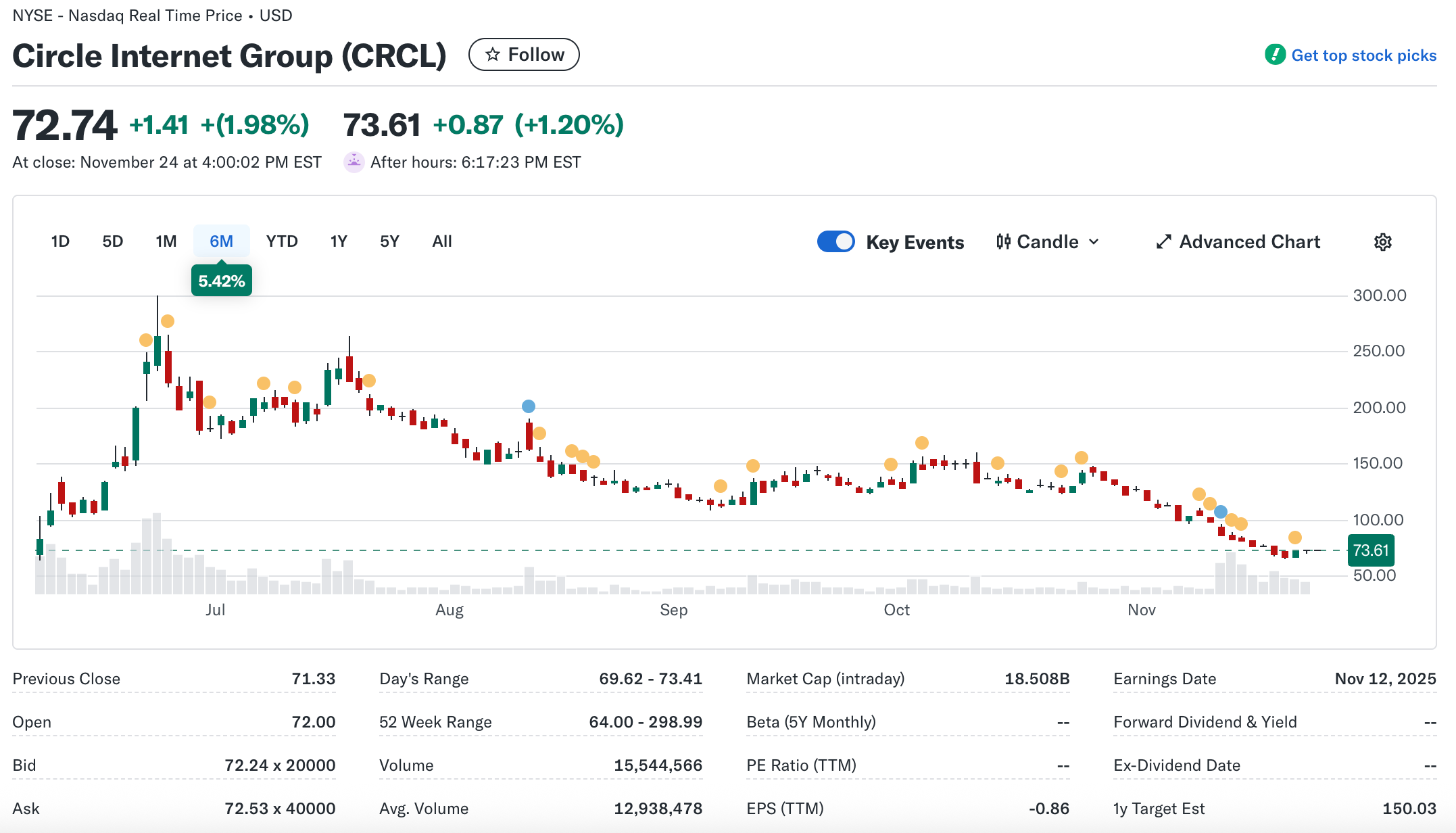
What Martin and Jeremy foresaw was spot on: the tension between Bitcoin’s original libertarian ideals and the pragmatic realities of regulation and institutional adoption would shape its future.
Today, in 2025, we see this vision fully realized. Bitcoin has matured into a highly institutionalized asset, embraced by legacy financial institutions, regulated under clear frameworks, and integrated into the broader financial system. Large financial institutions including JPMorgan, Citi, HSBC, and UBS are actively launching Bitcoin custody and settlement services. Corporations are increasingly allocating Bitcoin to their treasuries. Stripe, Mastercard, and Visa have all launched products enabling users to spend stablecoins via traditional rails,
Circle itself has grown into a critical infrastructure player in the $4 trillion crypto ecosystem, working hand-in-hand with regulators and generating massive transaction volumes globally. Stablecoin transaction volume remains dominated by USDT (Tether) and USDC, which consistently dwarf other stablecoins in scale. Between June 2024 and June 2025, USDT routinely processed roughly $703 billion per month, peaking at $1.01 trillion in June 2025. USDC, meanwhile, ranged during this 12-month period from $3.21 billion to $1.54 trillion monthly (source: Chainalysis).
The regulatory clarity championed by Circle’s Jeremy Allaire has proven essential, not a betrayal of the original dream, but a necessary evolution enabling mainstream adoption and mass-market growth. As Martin Mignot noted then, this move represented Bitcoin “growing up,” shifting from idealistic roots towards becoming a transformational economic force driven by experienced executives and venture-backed innovation.
The journey is far from over, but the foresight that Martin and Jeremy, in particular, demonstrated remains a guiding light in understanding Bitcoin’s ongoing evolution.
Thank, Raph.